



An aerial work platform truck is designed to position personnel and tools at an elevated work area while the vehicle remains supported on a suitable surface. This application guide helps contractors, maintenance teams and fleet buyers understand where an aerial platform truck can fit into a work plan. The right choice depends on the work position, basket load, access route, ground conditions and local operating requirements.
The vehicle shown here is a real delivery photograph used to illustrate the equipment category. It should not be read as a universal specification for every TRODAT model. Confirm the model-specific working envelope, platform capacity, chassis and safety functions before ordering.
Best starting point: define the work point first, then match the required height, outreach and platform load to a documented vehicle configuration.
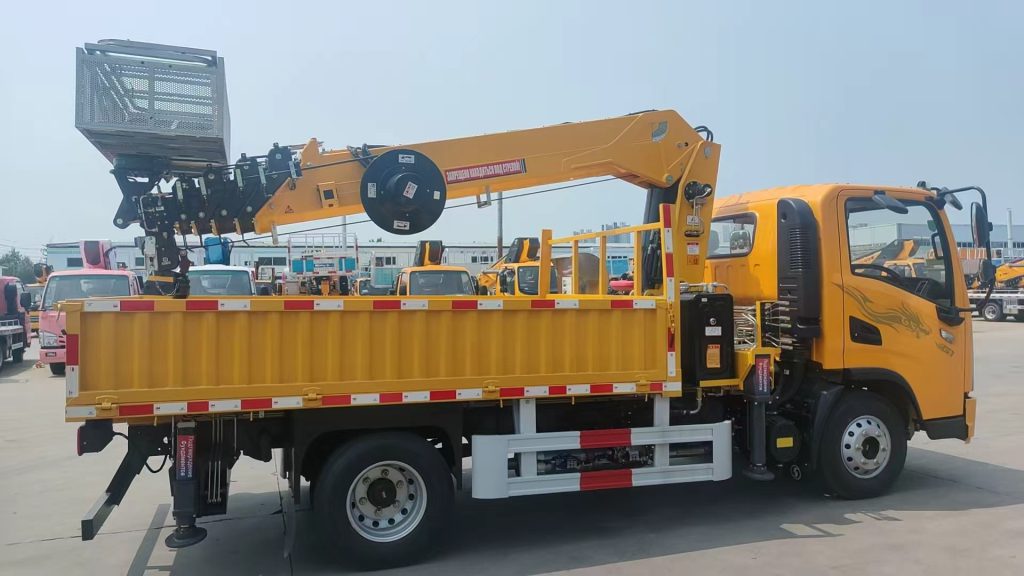
Where Aerial Work Platform Trucks Are Used
Building and Facility Maintenance
Platform trucks can provide a flexible access option for façade inspection, lighting work, signage, roof-edge maintenance and other tasks where a temporary access system is not practical. The vehicle can be repositioned between work areas, but every setup still requires a suitable route, a stable working surface and an assessment of overhead and surrounding hazards.
Utilities, Communications and Infrastructure
Elevated inspection and installation tasks often involve narrow work zones, traffic interfaces or overhead services. The planned work area should identify cables, structures, pedestrians and nearby vehicles before the platform is raised. The UK Health and Safety Executive’s MEWP guidance is useful general background on selection, training, ground conditions, rescue planning and inspection.
Industrial and Event Support
Industrial sites and temporary venues may require short-duration access for equipment checks, lighting installation or structural work. The platform load must include people, tools and materials, not just the weight of the operator. Work restrictions, wind limits and the manufacturer’s operating instructions must be applied for the specific vehicle.
What Buyers Should Confirm
- Required platform height and horizontal outreach at the actual work point.
- Personnel, tool and material load, including any attachment or basket limits.
- Vehicle dimensions, approach route, turning area and traffic controls.
- Ground bearing, outrigger deployment and any need for spreader plates.
- Overhead clearance, wind restrictions, rescue arrangements and operator competence.
Plan the Application Before the Enquiry
Send a simple sketch or site photographs with the intended height, outreach and load. This allows the specification discussion to focus on the task instead of a single headline number. Review the aerial work platform truck range and contact TRODAT for model-specific information.
자주 묻는 질문
Can an aerial platform truck be used on any surface?
No. The surface must be assessed for level, strength, voids, slopes and local hazards. Outriggers and spreader plates must be used as required by the model instructions and the site plan. A general product page cannot approve a particular worksite.
Does maximum height equal working outreach?
No. Height, outreach, platform load and working envelope interact. Ask for the model’s technical data and confirm the required work point rather than selecting a vehicle from maximum height alone.
Choose the Right Access Configuration
Aerial work platform truck applications are strongest when the equipment, operator and site plan are considered together. Use the application information to prepare a clear enquiry, then confirm the final configuration, documents and operating requirements in writing.