



Hydraulic hoses power many of the movements on aerial platform, loader crane and ladder lift trucks. A leaking hose is not just a housekeeping issue: pressure loss, uncontrolled movement and fluid injection can create serious harm. The correct response is to stop the affected work, secure the machine using the approved procedure and arrange competent assessment.
HSE’s hydraulic injection alert explains that pressurized fluid can penetrate the skin and that prompt professional medical treatment is essential after a suspected injection injury. A small-looking puncture should not be dismissed as a minor cut.
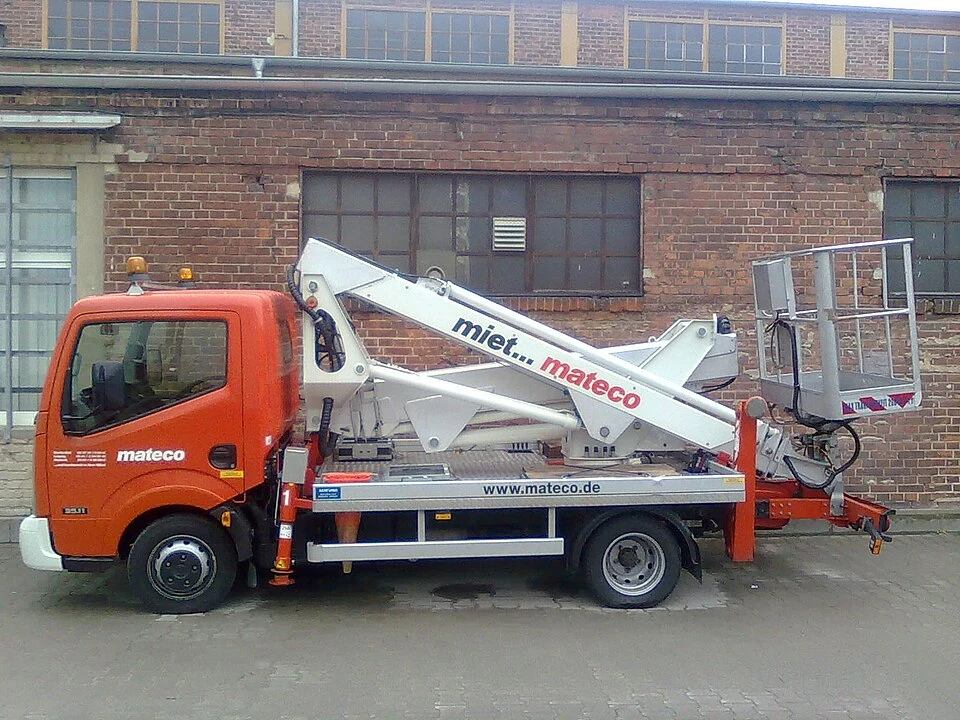
Key takeaway: Understand visible hydraulic hose defects, safe fault reporting and why a suspected high-pressure leak requires isolation and competent maintenance.
Recognize visible defects before they become failures
During the prescribed visual inspection, look for abrasion, damaged outer covers, exposed reinforcement, deformation, leaks and loose or damaged connections. Follow the manual and inspect from a safe position. Hose routing near joints, clips or moving parts deserves attention because repeated movement can rub or strain a line.
Never use a hand to find a pressurized leak
A fine jet can be difficult to see. Do not search for it with fingers or move closer to a suspected leak. Keep others clear and arrange the approved shutdown and isolation procedure. Maintenance personnel must consider trapped pressure, accumulators and elevated components; switching off the engine does not necessarily remove stored energy.
Report the fault with useful identification
Provide the equipment model, serial number, operating hours, affected function and when the symptom appeared. Photograph accessible markings only when doing so is safe. Record whether there is visible external leakage, slow motion, abnormal noise or an error message. These observations help the technician investigate without asking the operator to reproduce a dangerous condition.
Match the complete hose assembly
Replacement involves more than the same apparent diameter. The hose, fittings, pressure rating, fluid compatibility, routing, bend requirements and assembly method must match the approved specification. HSE calls for compatible fittings to the original equipment manufacturer’s specification where pressurized-system parts are replaced. Improvised adapters or field repairs should not be used to bypass that assessment.
Return the machine to service through a controlled process
After repair, the responsible technician should follow the specified checking and testing arrangements. Do not place someone underneath an elevated boom or platform to watch for leaks. Confirm that the original symptom is resolved and that the repair is documented. Update the maintenance record so repeat failures can be investigated rather than treated as unrelated incidents.
Practical checklist
- Stop work and keep people away from suspected pressure leaks.
- Secure, isolate and release stored energy under the approved procedure.
- Use equipment identification and fault observations for service requests.
- Have compatible replacement and return-to-service checks completed competently.
Frequently asked question
What if a high-pressure fluid jet touches the skin?
Seek immediate professional medical attention after a suspected injection injury and explain that pressurized fluid may have entered the tissue. Do not judge severity by the size of the wound. HSE warns that delayed treatment can have severe consequences; site personnel should know the emergency response arrangements.
Discuss your application with TRODAT
Explore our vehicle support services и selection and configuration services. Send your equipment requirements, destination country and site information so we can discuss the appropriate model and supply scope.
Sources and further reading
Sources reviewed 22 October 2026. This article summarizes general selection and planning considerations. Use the instructions and approved limits for the supplied equipment; regulatory requirements vary by destination. Referenced third-party equipment is shown for industry context.

Оставить комментарий